
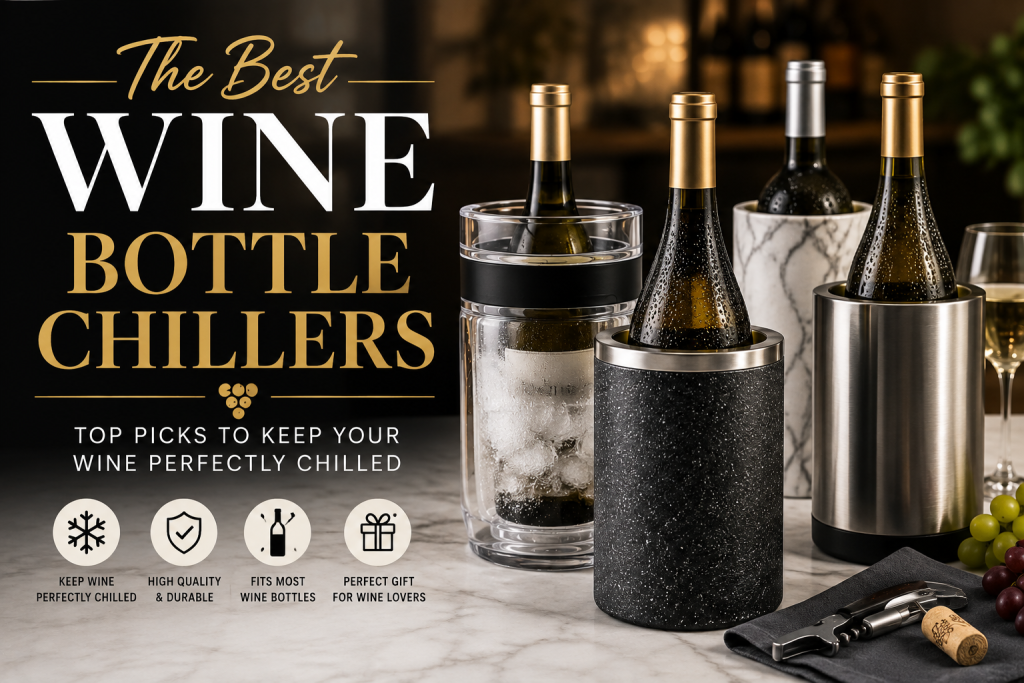
Wine bottle chillers keep a bottle cool during serving without requiring a refrigerator or a bucket of ice. They can help maintain a wine’s intended serving temperature at the table, on a patio, or while hosting guests. Common designs include insulated sleeves, countertop coolers, and ice-filled buckets.
The best wine bottle chiller depends on how long you need to keep the wine cold, how much space you have, and whether you prefer portability or precise temperature control. We also consider bottle compatibility, insulation, materials, ease of cleaning, stability, and whether the chiller requires ice, batteries, or an outlet. We evaluated these factors to identify the wine bottle chillers that make serving wine more convenient.
Best Wine Bottle Chillers
We selected the best wine bottle chillers based on cooling performance, insulation, durability, ease of use, and overall value. Our list includes practical options for keeping wine at a consistent serving temperature at home or outdoors.
Huski Wine Chiller
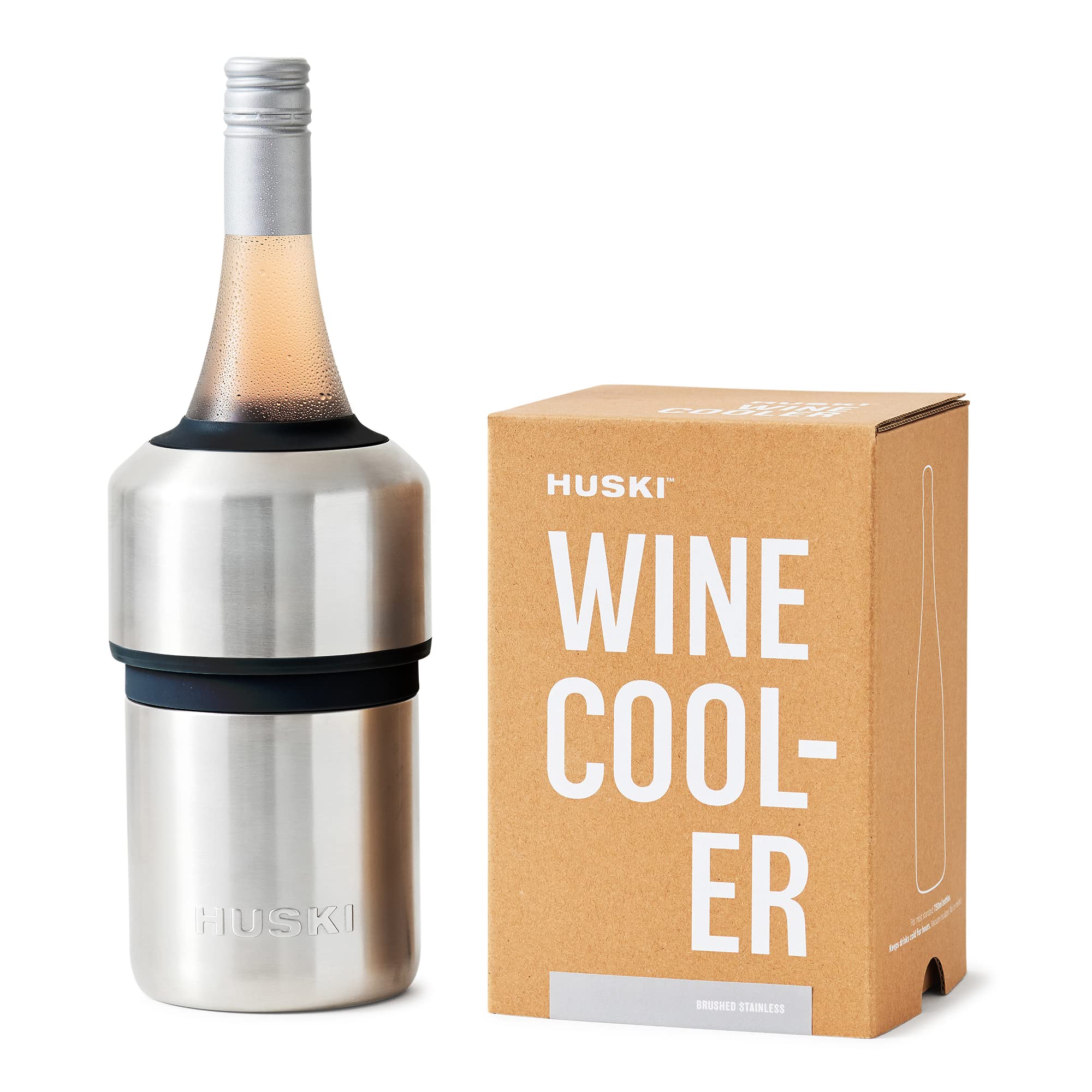
We recommend the Huski Wine Chiller for keeping a standard 750 ml bottle cold without ice, condensation, or repeated trips to the refrigerator.
Pros
- Keeps wine chilled for hours without ice
- Adjustable design holds many bottle shapes securely
- Clean stainless-steel finish suits most tables
Cons
- Does not fit every champagne bottle
- A snug fit can vary between bottle shapes
- Hand washing may be more convenient than cleaning around the lid
We found the Huski easy to use: place a chilled bottle inside, adjust the flexible collar, and pour as needed. Its low profile leaves much of the bottle visible, while the vacuum-insulated stainless-steel body keeps the outside dry.
During longer meals and outdoor gatherings, it maintained a cold serving temperature for several hours. We also appreciated not having to manage melting ice or water on the table.
The fit deserves attention before purchase. It works well with many traditional wine bottles and some champagne bottles, but wider or taller designs may not fit, including certain Dom Pérignon, Bollinger, Krug, and Korbel bottles. With the right bottle, the Huski offers a polished, practical alternative to a traditional ice bucket.
Oggi Stainless Steel Wine Cooler
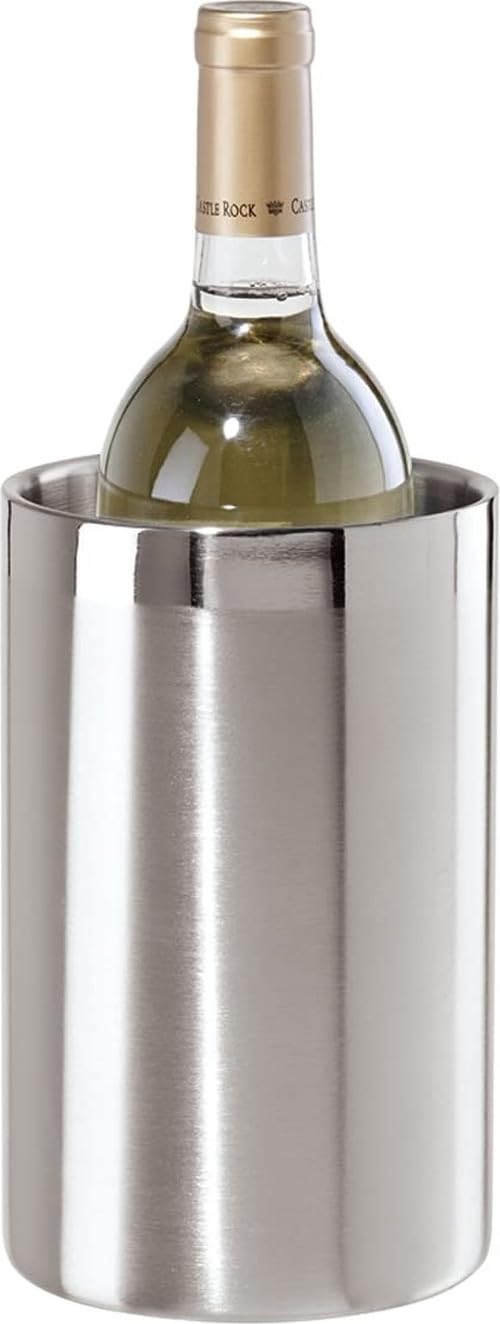
We recommend this single-bottle chiller for keeping refrigerated wine cold at the table without adding ice.
Pros
- Double-wall insulation helps preserve the bottle’s chill
- Clean stainless steel finish suits most table settings
- Compact design works indoors, outdoors, or at a bar
Cons
- Fits one standard bottle only
- Hand washing takes more effort than dishwasher cleaning
- The narrow interior leaves little room for ice
After using it with a chilled bottle of white wine, we found the Oggi cooler simple and effective for serving. The insulated walls slowed warming during a meal, although we still started with wine that was already cold.
Its brushed stainless steel exterior looks polished without feeling overly formal. The compact shape also takes up little table space, making it practical for dinner parties or casual use.
We would not choose it as an active ice bucket. The bottle fits fairly closely, so adding ice can be awkward, and the cooler performs best when we refrigerate the wine first. Hand washing is also required, but the smooth steel surface cleans easily.
Vinenco 7-in-1 Wine Chiller Set
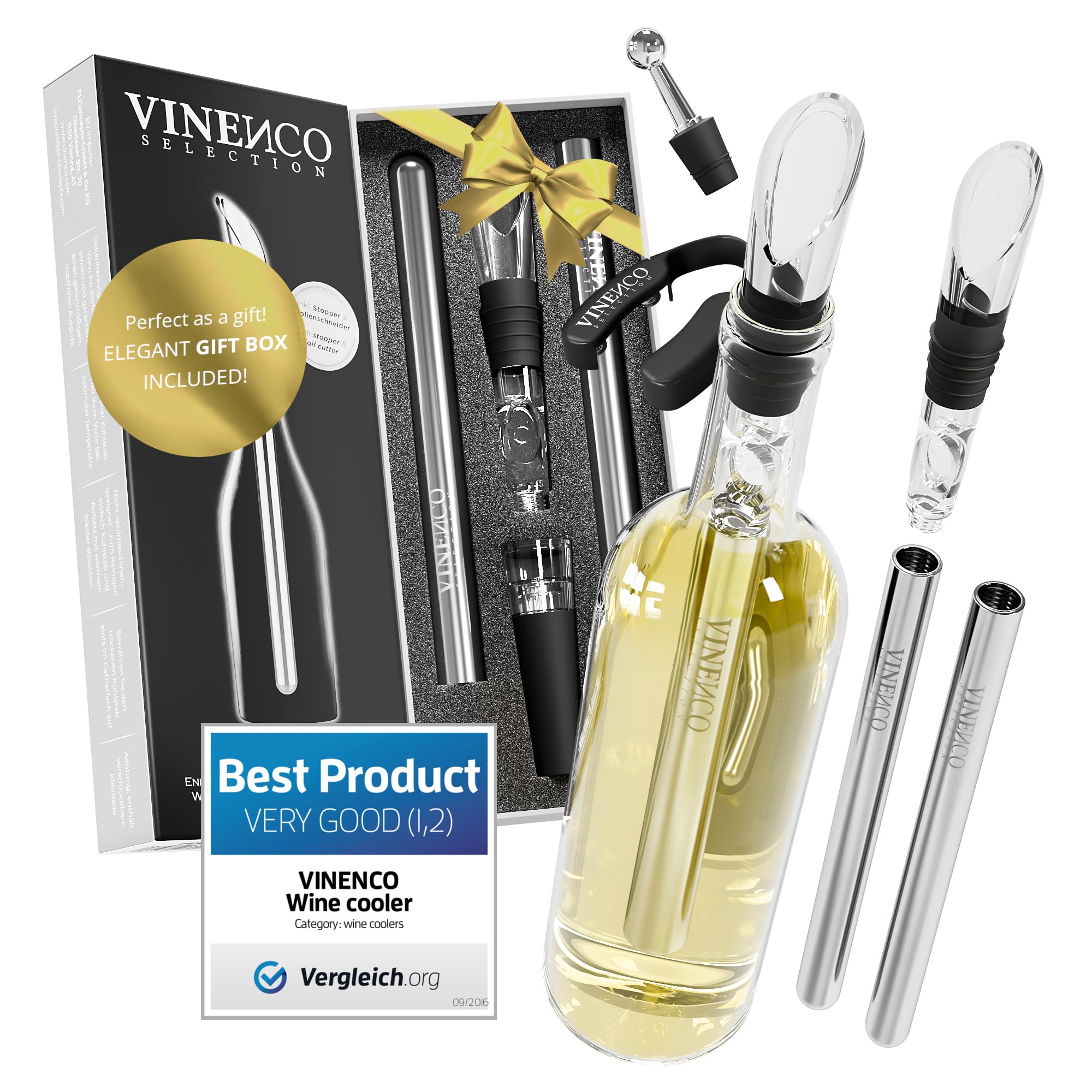
We recommend this set for keeping already chilled wine cool at the table while adding useful serving and storage tools.
Pros
- Two cooling rods accommodate different bottle shapes.
- The pourer, stopper, pump, and foil cutter add practical value.
- The set feels well suited to gifting and outdoor use.
Cons
- It works best with wine that is already cold.
- The pourer may dispense wine slowly.
- We need to pour a little wine first to avoid overflow when inserting the rod.
We found the cooling rods most useful for white wine, rosé, and sparkling wine during patio meals. After freezing a rod, we inserted it into a chilled bottle, and it helped maintain a cooler serving temperature without repeated trips to the refrigerator.
The two rod lengths make the set more adaptable than a single-size chiller. We also liked having a cooling bag for freezer storage, while the stopper and vacuum pump made the kit practical after opening a bottle.
This chiller does not rapidly cool warm wine, so we would not rely on it for last-minute serving. The pourer can also feel slow, and we recommend pouring a small amount before inserting the rod to prevent overflow. Overall, the Vinenco offers a useful combination of cooling and wine-serving accessories in one compact set.
Bebekae Stainless Steel Wine Chiller
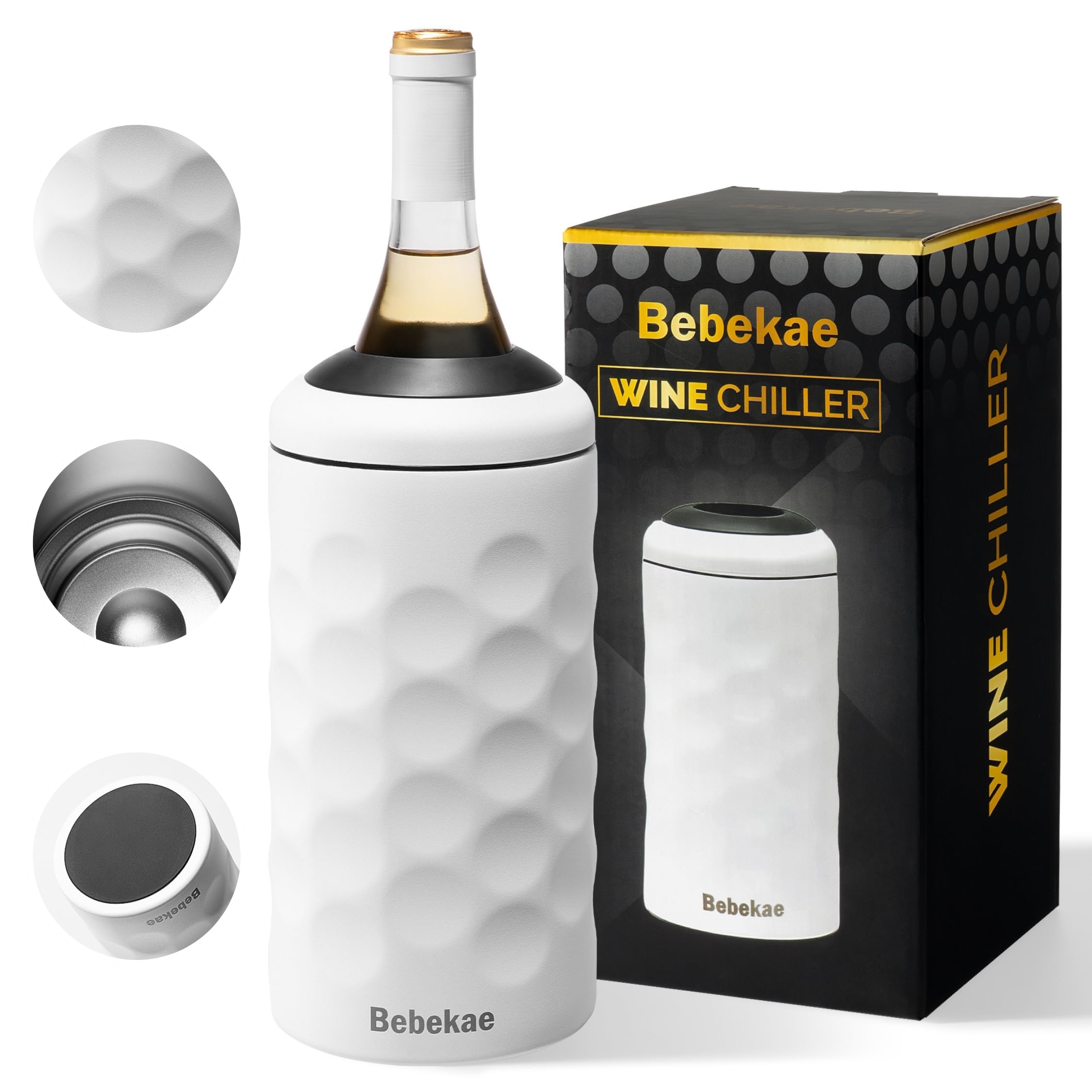
We recommend this chiller for keeping a standard wine or champagne bottle cold without ice, dripping water, or dilution.
Pros
- Keeps chilled bottles cold for hours
- Stable, attractive design for indoor or outdoor use
- Fits most standard 750 ml bottles
Cons
- May not fit unusually shaped bottles
- Does not actively chill wine
- Requires pre-chilled wine for best results
We found the Bebekae easy to use: we chilled the bottle first, placed it inside, and secured the top. Its double-wall insulation helped maintain a cold serving temperature without leaving moisture on the table.
The stainless steel body feels sturdy, while the silicone base kept the chiller steady during serving. Its white finish with a black lid also looked suitable for a dinner table, patio, or casual gathering.
The fit worked well with a standard 750 ml bottle, but larger or unusually shaped bottles may not slide in as easily. As with other insulated chillers, it maintains cold wine rather than cooling wine that starts warm.
Gusto Nostro Marble Wine Chiller
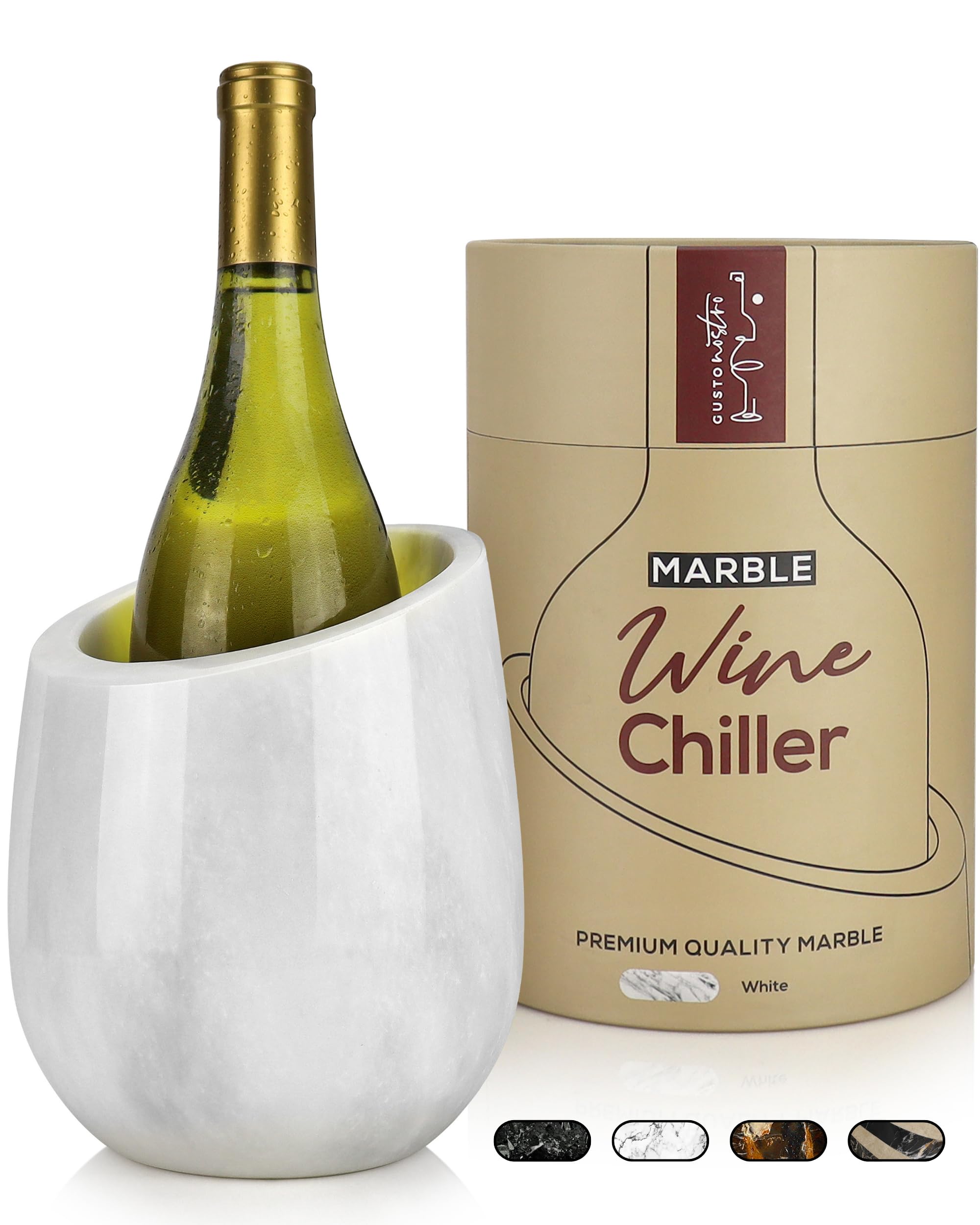
We recommend this elegant marble chiller for keeping a standard wine bottle cool while adding a polished touch to the table.
Pros
- Solid marble construction stays cool for extended serving
- Attractive enough for dinner parties, bars, or gifting
- Works with most standard 750 ml wine bottles
Cons
- Heavy and less convenient to move when filled
- Marble may chip if handled roughly
- Does not actively cool a warm bottle without pre-chilling
We found the Gusto Nostro chiller substantial as soon as we lifted it. Its smooth white marble gives it a refined appearance, while the weight helps keep it stable on a dining table or bar cart.
After chilling the bottle first, the marble helped maintain a pleasant serving temperature over the course of a meal. Like most passive wine chillers, it works best as a temperature keeper rather than a replacement for a refrigerator or ice bucket.
The opening fits a typical 750 ml wine bottle, though larger champagne bottles may be a tighter fit. We also like its versatility: when it is not holding wine, it can serve as an attractive utensil holder or countertop accent.
Packaging and handling deserve some care because marble can chip during shipping or if dropped. Overall, its strong customer rating and gift-ready presentation make it a practical choice for hosts who value appearance as much as cooling performance.
Buying Guide
We should match the chiller to our serving habits, storage space, and preferred wine styles. A bottle chiller for occasional use may prioritize portability, while frequent entertainers may benefit from faster cooling and room for multiple bottles.
| Feature | What we should consider |
|---|---|
| Cooling method | Active electric cooling offers consistent temperature control; passive designs need ice, chilled inserts, or pre-cooling. |
| Capacity | Choose a size that fits the bottles we serve most often without taking up unnecessary space. |
| Temperature control | Adjustable settings help us serve different wine styles at suitable temperatures. |
| Insulation | Effective insulation helps maintain temperature and reduces the need for frequent refilling or reheating. |
| Bottle compatibility | Check the interior diameter and height, especially if we use sparkling, oversized, or unusually shaped bottles. |
| Power and portability | Consider outlet access, battery requirements, weight, and ease of transport. |
| Cleaning | Removable parts, smooth surfaces, and wipe-clean materials make regular maintenance easier. |
We should also check noise levels for countertop or bedroom-bar use, along with controls that remain easy to read and operate. Materials should resist moisture and handle repeated contact with condensation.
For passive models, we should assess how long the cooling insert or ice remains effective and whether replacement inserts are readily available. For electric models, we should review energy use, warranty coverage, and safety features before buying.